
Class A vs Class B Multifamily in Northern Virginia
Class A vs Class B Multifamily in Northern Virginia
Class A multifamily properties in Northern Virginia feature newer construction, premium amenities, and top-tier rents, attrac
Key Takeaways
- Class A properties feature new construction, cutting-edge design, and premium amenities commanding higher rents.
- Class B properties offer older buildings with proven profitability track records and steady cash flow.
- Multifamily real estate investing provides significant tax benefits, consistent income, and strong asset appreciation potential.
- Northern Virginia's Sterling location positions investors to evaluate both luxury and value-focused multifamily opportunities strategically.
What Separates Class A From Class B Apartments?
A recognized classification system sorts multifamily properties into Class A, Class B, or Class C tiers, grading each on risk and expected return. Northern Virginia apartment buildings fall into this same framework, which shapes how passive investors evaluate opportunities from Arlington to Loudoun County.
Not every commercial property in the region performs the same way. That reality forms the foundation of any class A versus class B comparison. According to What Does Class A, B & C Mean in Real Estate Investing?, investors must consider if a new luxury building with cutting edge design, sumptuous materials and indulgent amenities may be a better investment than an older property that was once equally significant and has a long track record of profitability. Both paths can work, but they carry different risk profiles.
This system matters because each category carries different levels of risk and return. Knowing those characteristics helps determine whether a given property matches an investor's goals.
What makes a Class A apartment different from a Class B apartment?
Class A buildings typically represent newer construction with premium finishes, amenity packages, and stronger tenant demand. Class B properties tend to be older, well-maintained assets with a long rental history and steady, if less flashy, performance.
Why does property class matter for passive investors?
Property class signals how much risk an investor absorbs and what return profile to expect. Understanding this distinction supports a sound asset class comparison before committing capital to any Northern Virginia syndication.
Comparing apartment classes side by side clarifies the tradeoff:
Why Does Asset Class Matter for Returns?
Asset class determines how a Northern Virginia multifamily property generates income, appreciates, and manages risk for the people who own a share of it. Multifamily real estate ranks among the safest investment categories available to accredited investors, a distinction that holds across Arlington, Fairfax, and Loudoun County properties alike. Commercial real estate ownership delivers tax advantages, steady cash flow, and long-term appreciation, benefits that compound differently depending on which class a property occupies.
Not every Northern Virginia apartment community offers the same mix of perks. Cash flow stability, appreciation potential, and tax treatment all shift based on classification. Weighing Class A versus Class B properties makes this clear: a newer high-rise near the Dulles corridor behaves nothing like an older garden-style complex in a different Northern Virginia submarket, even though both fall under the multifamily umbrella.
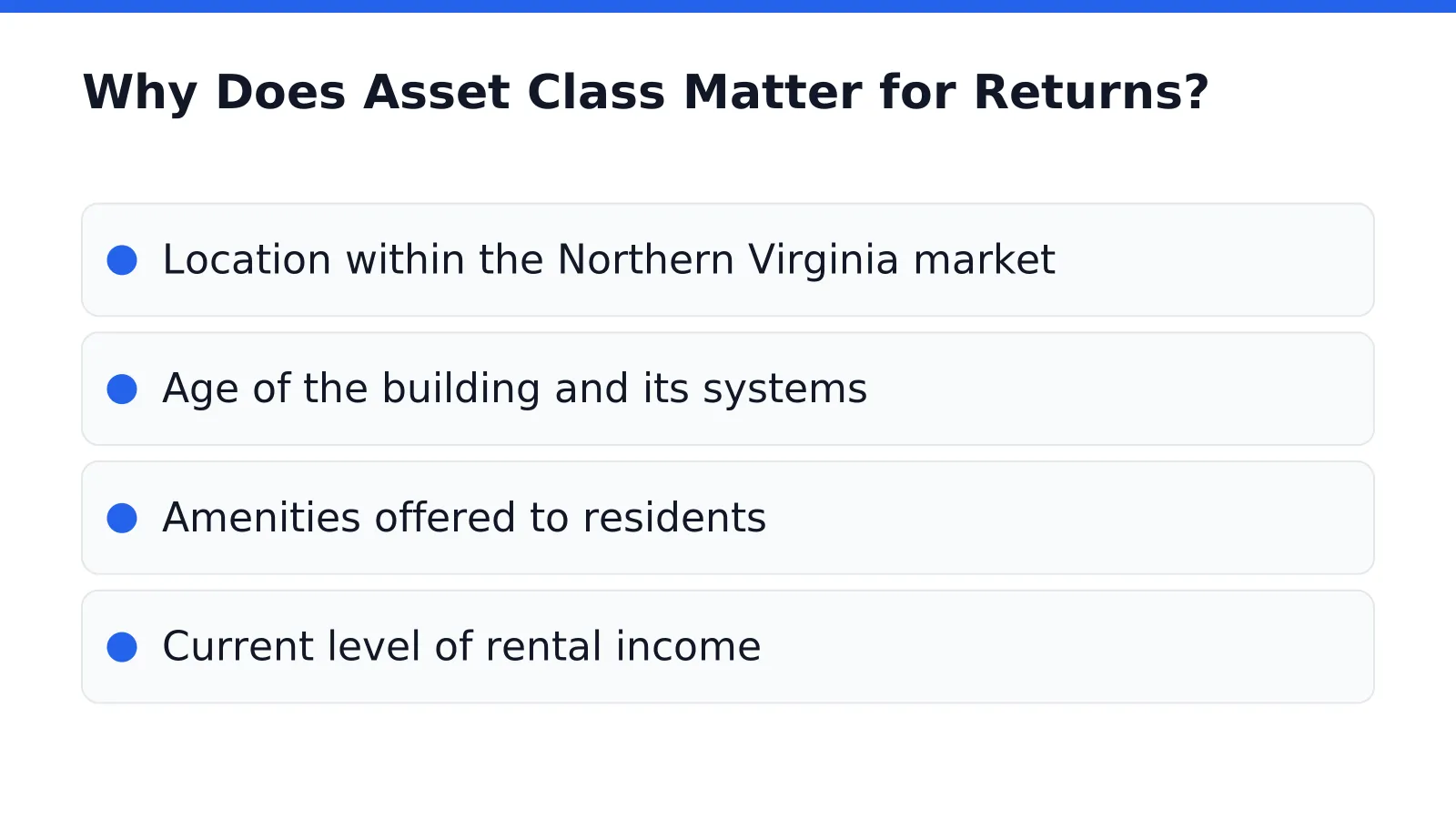
Appraisers and syndicators evaluate these properties using four consistent factors:
- Location within the Northern Virginia market
- Age of the building and its systems
- Amenities offered to residents
- Current level of rental income
How Does Classification Affect Risk and Return?
Classification signals how much risk an investor accepts for a given return. Newer, amenity-rich buildings in established Northern Virginia submarkets typically carry lower risk but slower upside. Older properties often offer higher potential returns, paired with more renovation and management risk.
Why Should Investors Compare Classes Before Committing Capital?
Skipping a careful asset class comparison risks a mismatch between an investor's goals and a property's actual performance profile. Comparing apartment classes side by side, rather than judging one property alone, shows how location, age, amenities, and income level interact before capital goes into a Northern Virginia syndication.

How Do You Compare Apartment Classes Side By Side?
Side-by-side evaluation starts with sorting a Northern Virginia property into one of four recognized categories. Multifamily real estate breaks down into four distinct tiers, class-a-vs-class-b-noVA territory included: Class A, Class B, Class C, and Class D, each reflecting a different mix of age, finish level, and location. Investors weighing opportunities across Fairfax County, Arlington, and Loudoun County lean on this framework before committing capital.
A thorough compare-apartment-classes-noVA review goes beyond curb appeal. Every asset class carries its own characteristics, income potential, and management demands, and those differences shape returns in distinct ways. Class A buildings near Tysons or Reston typically command premium rents but produce thinner cash-flow margins. Class B properties around Woodbridge or Manassas often deliver steadier income with moderate renovation needs. Class C and D assets, scattered through older corridors of Prince William and Fairfax counties, carry heavier management loads and more deferred-maintenance risk.
What should investors check first when comparing apartment classes?
Location and competitive positioning come first. Experienced underwriters, drawing on exhaustive due diligence across hundreds of properties, use class to measure a building against nearby competitors fighting for the same renter pool. That comparison reveals whether rents, amenities, and occupancy hold up before a single dollar moves.
A disciplined asset-class-comparison-noVA also weighs management burden against expected yield:
- Class A: lowest management intensity, lowest cash yield
- Class B: moderate management, balanced income and appreciation
- Class C/D: highest management intensity, highest potential yield paired with greater risk
Value Investment Partners applies this same due-diligence lens when screening Northern Virginia multifamily syndications, evaluating each property's class before presenting any opportunity to Club "VIP" members.

Who Qualifies to Invest Across These Asset Classes?
Accredited investors qualify to invest in Class A, Class B, and Class C multifamily syndications by meeting specific income or net worth thresholds set for securities investing. These thresholds exist to separate casual investors from those permitted to access private offerings, including apartment syndications across Northern Virginia.
Current requirements set the bar at:
- pricing varies in individual annual income for the past two years, with the expectation of maintaining that income
- pricing varies in joint annual income for the past two years, earned with a spouse or partner
- Net worth exceeding pricing varies million, held individually or jointly
Meeting one of these thresholds opens the door to a class-A-vs-class-B asset comparison across Northern Virginia's apartment markets, from Arlington high-rises to Loudoun County garden-style communities. Qualification alone does not guarantee access, though. Each syndication sets its own minimum investment and investor criteria.
Do accredited investors pay extra fees to access these deals?
General partners typically charge an acquisition fee, paid by the newly formed buying partnership. This fee compensates the partnership for finding, evaluating, financing, and closing the investment on behalf of passive partners. Acquisition fees reward the sponsor's work sourcing viable Class A, Class B, or Class C opportunities before an accredited investor commits capital.
Where can Northern Virginia investors learn whether they qualify?
Value Investment Partners, based in Sterling, VA, serves accredited and sophisticated investors seeking exposure to Northern Virginia multifamily real estate. Members of Club "VIP" gain a structured compare-apartment-classes education and ongoing guidance on how each tier performs across Northern Virginia submarkets, all without landlord duties. A direct conversation covering this asset-class comparison clarifies eligibility and minimums before any commitment.
Which Class Fits Your Northern Virginia Portfolio?
Fit depends on the goal: cash flow today, appreciation tomorrow, or a blend of both. Northern Virginia's multifamily market spans gleaming high-rises near major employment corridors and modest garden-style communities further out. The "right" class shifts with each investor's timeline and risk tolerance. Multifamily real estate remains a popular choice across the region, offering steady income and long-term growth potential for portfolios of nearly any size.
Class-A vs. class-B properties often comes down to patience versus yield. Class A assets, with newer construction and premium finishes, tend to deliver more predictable but modest cash flow. Class B properties, often slightly older with room for upgrades, can produce stronger returns once renovations and improved management take hold.
How Should an Investor Compare Apartment Classes Before Committing Capital?
A clear-eyed asset-class comparison starts with matching property characteristics to personal objectives, not chasing the flashiest building. Consider these factors side by side:
- Income stability: Class A offers steadier, lower-risk cash flow; Class B and C carry more upside but more variability.
- Renovation potential: Older Class B and C properties often hold hidden value through capital improvements.
- Time horizon: Longer hold periods suit value-add strategies common in Class B deals.
- Risk appetite: Conservative investors often lean toward Class A stability.
Understanding asset classes thoroughly helps both new and experienced investors manage risk while maximizing returns, regardless of experience level.
Who Can Help Match an Investor to the Right Class?
Investors weighing these tradeoffs across Northern Virginia don't have to decide alone. Value Investment Partners works with accredited and sophisticated investors to align property class with personal financial goals. Those interested in joining Club "VIP" can schedule a one-on-one call to discuss individual criteria before committing capital.
FAQ
Which multifamily class carries lower risk in Northern Virginia?
Class A properties carry lower risk due to newer construction, premium amenities, and strong tenant demand. Class B properties carry moderate risk tied to older buildings with proven profitability.
What financial benefits come with multifamily investing regardless of class?
Multifamily real estate delivers tax advantages, steady cash flow, and long-term appreciation, with these benefits compounding differently depending on whether a property falls into Class A or Class B.
How does Value Investment Partners' location support evaluating these properties?
Value Investment Partners, based in Sterling, VA, with 2 employees, sits within the Northern Virginia market, positioning the firm to assess both luxury Class A and value-focused Class B multifamily opportunities.
Conclusion
In closing, the choice between Class A and Class B multifamily properties in Northern Virginia depends on your investment priorities and risk tolerance. Class A properties offer newer construction and premium amenities but command higher acquisition costs. Class B assets provide stronger cash flow potential through value-add strategies at more accessible price points. Both pathways build wealth through institutional-quality apartment investments, the right choice aligns with your financial goals and investment timeline.


